 Defne Yucesoy
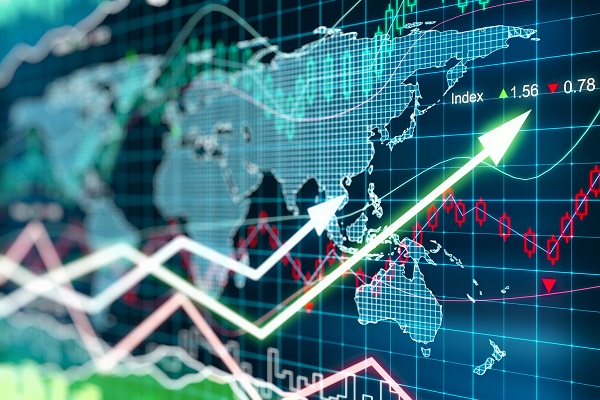
For decades, economic growth has been the ultimate growth for economists. Whether it’s governments celebrating rising GDP levels, headlines praising expanding economies success has been often reduced to a single number. This number is how much more a country produces compared to last year. What if growth doesn’t always mean progress?
At the center of this argument we face the term “Gross Domestic Product” (GDP). GDP is the measure of the total value of how much a country produces within its borders during a specific time, usually a year. GDP is clean and convenient but it is often limited. GDP counts everything the country produces within its border whether it’s beneficial for people or not. Oil spills increase GDP because they require cleanup. Overpopulation in traffic causes an increase in fuel consumption which contributes to economic activity. Even natural disasters can affect GDP growth during the phases of reconstruction. GDP also fails to capture mental well being, income inequality, environmental degradation etc. which is just as important. In this sense growth becomes an illusion of progress that we create. A number rising without really capturing real improvement.
This issue is nowhere clearer in the relationship between the environment and economic growth. Fast industrialization often relies on mass production, deforestation and fossil fuel consumption. Yes, these are the kind of processes that increase output in the short term but cause long term costs. These costs create a dangerous trade off. The same activities that drive growth today may undermine the conditions for growth tomorrow.Countries that are in a rush chasing a higher GDP can unintentionally be sacrificing sustainability, locking themselves into cycles of environmental damage that are costly.
Economic growth is not intrinsically harmful. In fact it has helped many cases of poverty, improved infrastructure and expanded healthcare and education. The issue is not the growth by itself but it is what is prioritized alongside it. In the long run there is a prominent question that economies face: Should growth be maximized at all costs or should it be balanced with sustainability and equity? This question is where the concept of trade offs should be underlined. Policies that are needed to protect the environment may slow the economic growth in the short run but create astonishing stability in the long run. Investments in education or green technology may not immediately increase GDP but increase future productive capacity with time.
Some economists and important policy makers are starting to ask questions about gDP’s dominance in the economy. They are challenging it with ideas such as well being indexes,
sustainable development metrics, happiness indicators in order to aim to measure what GDP can’t. These approaches are a way to create more focus on the way people live and not how much the economy produces. Growth should be a means not an end.
Yes, economic growth is something that holds power but it is not neutral. Economic growth reflects choices about what we produce, how we produce and who is benefitted from the things we produce. So, the question isn’t whether growth is good or not. It is : What kind of growth are we pursuing and at what cost?